
CALL US 24/7
(760) 420-0166
OPENING HOURS
Mon - Fr 9:00 am - 5:30 pm
ADDRESS
3760 Oceanic Way STE 501, Oceanside, CA 92056
28
Jan
Share
Comments Off on CA Solar Tax Exemption: No Property Tax Hike Until 12/31/26 News
CA Solar Tax Exemption: No Property Tax Hike Until 12/31/26
Many California property owners are interested in solar energy but hesitate because of one common concern: Will installing solar panels increase property taxes? Since property taxes are based on a home or building’s assessed value, it is reasonable to assume that adding a valuable energy system could lead to a higher tax bill.
Fortunately, California has addressed this concern through a special rule known as the Solar Property Tax Exclusion. This policy allows qualifying property owners to install active solar energy systems without triggering a property tax reassessment on the added system value. Understanding how this exclusion works can help both residential and commercial property owners make more informed decisions about long-term energy improvements.
What California’s Solar Property Tax Exemption Actually Does
California’s Solar Property Tax Exemption, formally known as the Active Solar Energy System Exclusion, is a state policy that prevents the value of a qualifying solar energy system from being added to a property’s assessed value for tax purposes. In simple terms, installing solar panels does not trigger the kind of reassessment that normally happens when you make a significant improvement to a home or commercial building.
Under standard property tax rules, upgrades that add value to a property can increase its taxable assessment. Solar is treated differently. The state recognizes that solar energy systems provide environmental and grid benefits, so it allows property owners to install them without being penalized through higher property taxes.
This exclusion applies specifically to active systems that generate electricity or provide energy for on-site use, rather than passive design features like skylights or south-facing windows. The key takeaway is that while solar may increase a property’s market appeal, the added system value is excluded when local assessors calculate property taxes.
Why Property Taxes Normally Increase After Improvements
In California, property taxes are generally based on a property’s assessed value, which is established when the property changes ownership and can increase when significant improvements are made. This process is known as reassessment. When you add value to a property through certain types of construction or upgrades, the county assessor may raise the assessed value to reflect those improvements, which can lead to higher property taxes.
For example, building an addition, converting a garage into living space, or adding a new accessory dwelling unit (ADU) can all trigger a reassessment for the portion of the property that was improved. Even major interior remodels or structural upgrades can sometimes affect how a property is valued for tax purposes.
Because solar energy systems are a substantial investment, many property owners understandably assume they will be treated the same way as other major upgrades. The Solar Property Tax Exclusion exists specifically to prevent that outcome, allowing owners to improve their property’s energy performance without increasing their tax burden due to the added system value.
Who Qualifies for the Exemption?
One of the most beneficial aspects of California’s Solar Property Tax Exemption is how broadly it applies. The exclusion is not limited to a specific type of property owner. Instead, it covers a wide range of residential, commercial, and industrial properties, as long as the system meets the definition of an active solar energy system.
For residential properties, this includes single-family homes, townhomes, and multifamily buildings such as duplexes or apartment complexes. Homeowners who install solar panels to generate electricity for their property can generally take advantage of the exclusion, provided the system is properly permitted and installed.
Commercial and industrial property owners can also qualify. Office buildings, retail centers, warehouses, agricultural facilities, and other business properties that install solar energy systems for on-site power use are typically eligible. This makes the exclusion especially valuable for property investors and business owners looking to manage long-term operating costs without increasing their property tax assessment.
In short, if you own property in California and install a qualifying active solar energy system that provides energy to the building, there is a strong likelihood the added system value can be excluded from your property tax assessment under current law.
What Equipment Is Covered?
The California Solar Property Tax Exemption applies to more than just the solar panels you see on a roof. It generally covers the full range of components that make up an active solar energy system designed to produce usable energy for a property.
This typically includes photovoltaic (PV) modules, which convert sunlight into electricity, as well as inverters that change that electricity into a form that can be used in a building. Mounting systems, racking, wiring, and other balance-of-system equipment that supports the operation of the solar array are also considered part of the qualifying system.
In many cases, energy storage systems that are directly connected to and charged by the solar installation may also be included, especially when they are installed as part of an integrated solar energy system. However, eligibility for batteries and storage can depend on system design and how the equipment is classified, so property owners should confirm details with their installer and local assessor.
The key requirement is that the equipment must be part of an active system that generates and delivers energy for on-site use. Decorative features or passive solar design elements, such as skylights or building orientation, do not fall under this exclusion.

How Long the Exemption Lasts (Important Deadline)
California’s current Solar Property Tax Exclusion is not permanent, which makes timing an important consideration for property owners. Under existing law, the exclusion for active solar energy systems applies to qualifying systems installed on or before December 31, 2026. This means that, as of now, systems added before that date can benefit from having their value excluded from property tax assessments.
For property owners planning a future solar project, this deadline is important because it sets the window during which the added system value can be protected from reassessment under the current rules. While extensions are possible, they depend on future legislative action, and there is no guarantee that the same terms will continue beyond the current end date.
Because tax laws and assessment rules can change, it is wise for property owners to verify the most up-to-date information with their county assessor’s office or a qualified tax professional. Understanding the timeline in advance can help ensure that a solar installation aligns with the available property tax protections.
Does the Exemption Reduce Your Current Tax Bill?
It is important to understand what the Solar Property Tax Exemption does — and what it does not do. This program is not a rebate, credit, or direct reduction in your existing property tax bill. Instead, it prevents a new solar energy system from increasing your property’s assessed value for tax purposes.
In practical terms, if you install a solar system, the value of that system is excluded when the county assessor determines whether your property’s taxable value should go up. Your current property tax base generally stays the same, aside from the standard annual increases allowed under California law.
For example, imagine a commercial property owner installs a $75,000 solar system. Without the exclusion, that improvement could potentially raise the assessed value of the property, leading to higher property taxes over time. With the exclusion in place, the assessor does not add that $75,000 system value to the property’s taxable assessment.
The result is that property owners can invest in long-term energy improvements without worrying that the solar installation itself will lead to a higher property tax burden.
How the Exemption Works With Other Solar Incentives
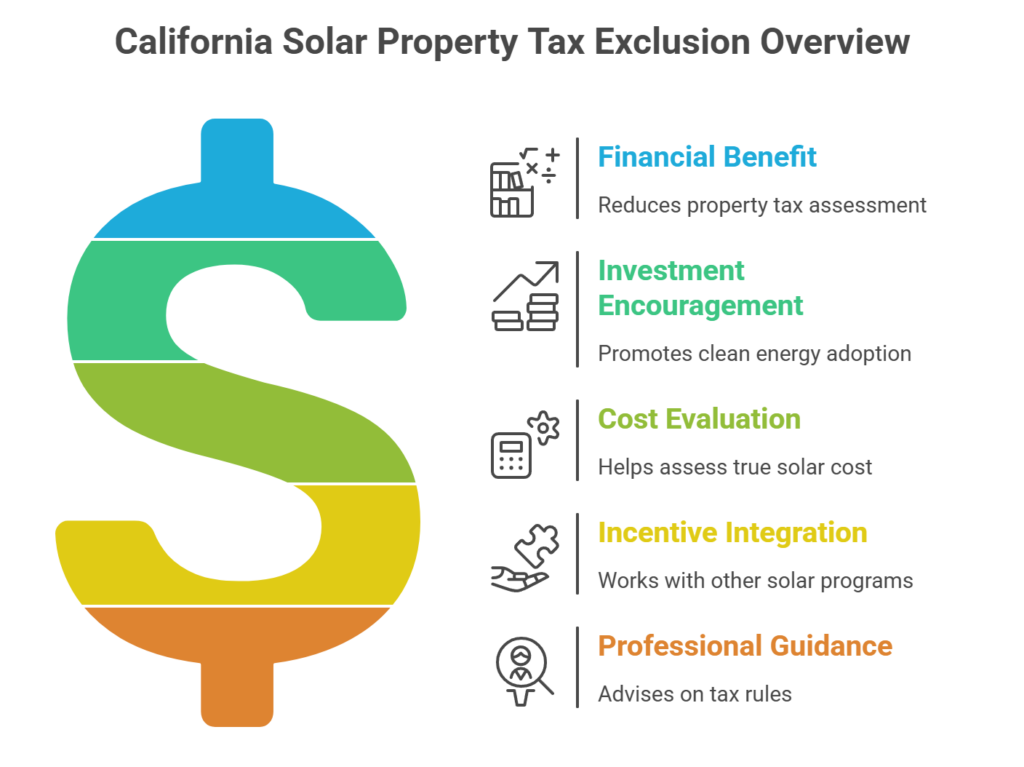
The California Solar Property Tax Exemption is just one part of the broader financial picture for property owners considering solar. While this exclusion helps prevent an increase in property taxes, other programs can affect the overall cost and long-term savings of a solar installation.
At the federal level, many property owners may be eligible for the Investment Tax Credit (ITC), which allows a percentage of the solar project cost to be claimed as a credit against federal income taxes. For commercial property owners, additional tax benefits such as accelerated depreciation may also apply, depending on the structure of the project and current tax law.
On the utility side, solar systems are typically connected to the grid under billing structures that provide credits for excess energy sent back to the utility. While compensation rates and program details vary, these arrangements can help offset energy costs over time.
Together, these incentives address different parts of the financial equation. The property tax exclusion prevents a tax increase tied to added property value, while federal tax incentives and utility programs influence upfront costs and long-term operating savings. Understanding how these pieces work together can help property owners evaluate the overall impact of a solar investment.

Do Property Owners Need to Apply to Get the Solar Property Tax Exemption?
In many cases, property owners do not have to go through a complicated application process to receive the Solar Property Tax Exclusion. When a solar energy system is properly permitted and installed, information about the project is typically shared with the county assessor as part of the normal building and inspection process. The assessor can then apply the exclusion when reviewing the property’s assessed value.
However, procedures can vary by county. Some assessor’s offices may request additional documentation or have specific forms related to the active solar energy system exclusion. This is especially true for larger commercial projects or more complex system designs.
Because local processes can differ, property owners should consider contacting their county assessor’s office to confirm how the exclusion is handled in their area. Keeping copies of permits, inspection records, and system documentation can also be helpful if any questions arise about how the solar installation should be treated for property tax purposes.
Common Questions About Solar and Property Taxes in California
Will adding solar increase my property’s value when I sell?
In many cases, solar can make a property more attractive to buyers because of lower energy costs and improved efficiency. The property tax exclusion only affects how the system is treated for tax assessment purposes. Market value and resale value are separate considerations and can still be positively influenced by a solar installation.
Does the exemption apply to leased solar systems?
Eligibility can depend on system ownership and how the equipment is classified. In some cases, third-party-owned systems may be treated differently for tax purposes. Property owners with leased or power purchase agreement (PPA) systems should confirm details with their county assessor or a tax professional.
What happens if I expand my solar system later?
Additional equipment added before the current program end date may also qualify for the exclusion, but each project phase can be reviewed separately. Proper permits and documentation remain important to ensure the added system components are correctly identified as part of an active solar energy system.
Does replacing or upgrading my roof qualify for the same exclusion?
Roofing work by itself is typically considered a standard property improvement and does not fall under the solar property tax exclusion. However, roofing and solar projects are often completed together for practical reasons, even though they are treated differently for property tax purposes.
Do I need to do anything special during installation?
Most of the responsibility for proper permitting and inspection falls on the contractor and local building department. Still, property owners should keep records of permits, inspection approvals, and system details in case the county assessor ever needs clarification about the project.
Key Takeaways for California Property Owners Considering Solar
California’s Solar Property Tax Exclusion gives property owners a unique opportunity to invest in clean energy without increasing their property tax assessment under current law. By excluding the value of a qualifying active solar energy system, the state removes one of the common financial concerns associated with making a long-term energy upgrade.
For homeowners, business owners, and property investors alike, understanding how this exclusion works can make it easier to evaluate the true cost of going solar. When combined with other available incentives and long-term energy savings, the property tax exclusion plays an important role in the overall financial picture.
Because tax rules and deadlines can change, it is always wise to confirm details with your county assessor’s office or a qualified tax professional. Having clear information upfront helps ensure that a solar project aligns with both your energy goals and your long-term financial planning.
Recent Posts

How Much Does a Metal Roof Cost in San Diego in 2026?
22th Feb 2026


Attic Insulation Upgrades That Cut Cooling Costs
19th Oct 2025


